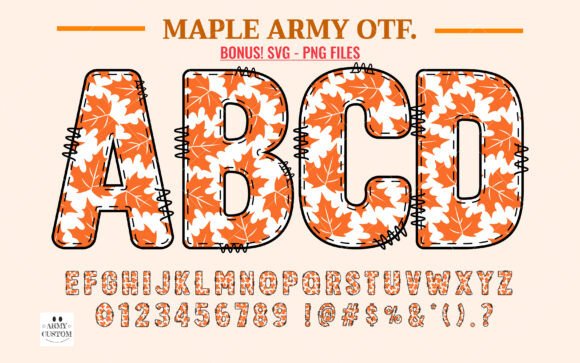
Maple Army: Elevating Seasonal Design with Artful Typography
As the crisp autumn air arrives and the landscape transforms into a canvas of amber and gold, designers seek to capture that same warmth and nostalgic joy in their visual projects. This is where the Maple Army of creative assets comes into play, and introducing the “Thanksgiving Maple Leaves” font is a perfect example of how a single, well-crafted typeface can become the cornerstone of a compelling seasonal design strategy. This artful blend of exquisite lettering is more than just a font; it's a visual storytelling tool that embodies the cozy, radiant spirit of the Fall season.
The Power of a Cohesive Visual Theme
In modern graphic design, consistency is king. A cohesive visual theme strengthens brand identity, improves user engagement, and ensures your message is communicated with clarity and emotional resonance. The “Thanksgiving Maple Leaves” font, with its unique pattern design reminiscent of maple leaves, provides an immediate and powerful thematic anchor. It carries the splendor of autumn in each stroke, connecting your audience with the heartfelt nostalgia of the Harvest season. For any designer, marketer, or business owner, having such a thematic asset in your toolkit is invaluable for creating targeted, effective campaigns.
Practical Applications Across Creative Projects
The true value of a design asset like this lies in its versatility. Here’s how you can integrate this autumnal typeface into your professional workflow:
- Branding and Logo Design: Create a distinct seasonal identity for a café, farm stand, or a Thanksgiving-themed event. The font can serve as a primary logotype or a complementary accent.
- Marketing Materials: Design eye-catching flyers, posters, and email headers that immediately communicate a festive, promotional offer for the fall season.
- Social Media Content: Craft scroll-stopping graphics for Instagram stories, Facebook posts, and Pinterest pins that boost engagement with a warm, inviting aesthetic.
- Packaging & Print Design: Elevate product packaging for artisanal goods, holiday menus, or event invitations with a touch of handwritten, organic charm.
- Digital Products & Web UI: Use it sparingly in web design for call-to-action buttons, hero section headlines, or within a digital magazine to add thematic flair without compromising UX.
Technical Considerations for Seamless Integration
When incorporating specialized fonts, technical compatibility is a critical part of the design workflow. The black version of this font is fully compatible with Cricut Design Space and other cutting machines, making it ideal for physical craft projects like signage and apparel. However, for digital design work in programs like PhotoShop, Illustrator, Silhouette, or Inkscape, the color version offers a stunning, pre-designed visual effect. It's essential to note that the OTF/TTF color files are not compatible with Cricut. Always consult resources like an Ultimate Font Guide to understand file formats and software compatibility, ensuring your creative projects proceed without technical hurdles.
Choosing Typography with Intention
Selecting a typeface is a fundamental design decision that impacts visual hierarchy, readability, and emotional tone. When evaluating a font like this, consider:
- Audience and Context: Does the playful, decorative style align with your target audience and the project's message? It's perfect for consumer-facing brands but may need careful pairing with a neutral sans-serif for corporate applications.
- Scalability and Legibility: Test the font at various sizes. While ideal for headlines and logos, ensure it remains legible when scaled down for smaller text.
- Brand System Integration: How does it interact with your existing color palette, imagery, and other typefaces? Use it as an accent font to maintain a professional presentation.
Thoughtful design choices are what separate good work from great work. By strategically integrating high-quality, thematic creative assets like the “Thanksgiving Maple Leaves” font, you do more than just decorate a page; you build an atmosphere, tell a story, and create a memorable experience. This approach to visual communication not only enhances the aesthetic quality of your projects but also deepens the connection with your audience, proving that in design, every detail contributes to the whole.